
Built for Texas-sized documentation needs that support students and teachers.
Socrait is the voice-powered class companion that creates documentation directly from the teacher’s voice in a classroom and reduces a teacher’s follow-up workload.
Socrait listens while teachers teach, collects what they say about each student, and turns it into the behavior data, parent communication, and classroom documentation that Texas MTSS, your special education evaluation clocks, and attendance accounting already require your staff to produce.
Equitable student support starts with consistent, accurate data. Socrait provides the means to create a positive classroom environment without adding more work to a teacher’s day. Funded through the Texas streams your district already manages.
All without recording.
Texas’s compliance stack
...and the paperwork behind it
Texas doesn’t have one teacher workload law. It has a stack of them.
This cluster of obligations all land, in the end, on your teachers. None of these
obligations are the hard part. The hard part is what goes inside them: the specific, dated, teacher-observed
classroom evidence that makes a report defensible, an IEP useful, an ARD conversation grounded, and a parent
conversation grounded in what actually happened.
That evidence lives in your teachers’ heads until they have time to write it down, which leads to incomplete,
inconsistent, or missing data. Socrait creates the missing layer between what happened in class and the
documentation that follows it.
Tiered support that runs on classroom evidence.
TEA funds the Tiered Interventions Using Evidence-Based Research (TIER) initiative and places certified TIER trainers at every regional ESC to build MTSS capacity across academics, behavior, and mental health. MTSS depends on screening, progress monitoring, and a problem-solving or student support team reviewing data over time. None of that runs on end-of-week recollection. It runs on dated, specific, classroom-level evidence.
- Behavior, praise, and redirection patterns captured as they happen
- Intervention observations and response-to-support evidence for Tier 1, Tier 2, and Tier 3
- Trends a problem-solving or SST team can actually read
- Records ready to feed the MTSS workflow your campus already runs
Special education clocks that punish a thin record.
Texas runs on a 15 / 45 / 30 rhythm: 15 school days to give prior written notice on an evaluation request, 45 school days from written consent to a completed Full Individual and Initial Evaluation, and 30 calendar days from eligibility to the initial IEP at the ARD meeting. Progress toward IEP goals must be reported to families. Socrait does not replace your IEP system. It gives the ARD team a clearer factual record before FBA discussions, BIP reviews, and manifestation conversations, so the meeting starts from what actually happened.
- Dated behavior history before FBA and BIP work
- A removal and intervention chronology before manifestation review
- Classroom-specific observations that make IEP progress reports actually describe a student
- Family-ready language for the communication these timelines require
Student signals, documented before it becomes a pattern.
Texas requires attendance accounting through your district systems and truancy prevention measures before a truancy referral. Chronic absenteeism is one of the state at-risk criteria under TEC §29.081, the same definition that drives accelerated instruction and State Compensatory Education funding. Catching the early signal in class, and writing it down, is where the at-risk conversation either starts on time or starts too late.
- Participation dips and attendance moments noted in the moment
- Outreach reminders before a pattern hardens
- Classroom context that makes a truancy or at-risk conversation specific
- Records ready for the SST or attendance team before a referral
How Socrait fits seamlessly between Texas classrooms and communication
Socrait listens to the teacher, not the students, and turns everyday narration into usable documentation. There is no audio recording and no new workflow to learn.

Press Stream when class starts.
The teacher activates Socrait manually. It listens only when they choose to start it, and they can stop at any time.
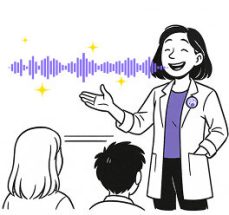
They teach like they always teach.
As the teacher narrates the room — a redirection, a win, a check-in, a note to follow up with a parent — Socrait seamlessly collects it in the background. No audio is stored, and student names are anonymized before any data reaches an AI model.

After class, the documentation is waiting.
Dated, organized, and ready for review and editing before anything is used or shared.
Your SIS, your IEP system, and your PBIS platform don't go away. Socrait feeds them the consistent, ground-level data they've been starving for without adding another data-entry job to your teachers' week.
What Socrait produces:
- Praises and warnings daily student tally
- MTSS tier 1 and PBIS-ready classroom observations
- Parent-communication drafts
- Class summaries, assignment changes, and reminders
- Student profiles with behavior tracking and summaries for context
- Behavior tracking over time with custom messages
- Engagement, participation, and attendance signals
Texas funding streams purchase Socrait.
We’ve mapped Socrait to the live Texas funding streams district leaders already manage. This is meant as a starting point for your federal programs director, business manager, or PEIMS coordinator, not as legal or budgetary advice.
Title IV-A — Student Support and Academic Enrichment
BEST FITTitle IV-A allowable uses include school climate, PBIS implementation, reducing exclusionary discipline, family engagement, and effective use of technology. Socrait fits multiple Title IV-A categories without competing with existing buys.
IDEA Part B
SPECIAL EDUCATIONWhen Socrait supports documentation, progress monitoring, FBA/BIP preparation, and parent communication for students with IEPs, it fits within IDEA Part B’s support-of-service framing. Confirm local allowability with your special education director.
State Compensatory Education (SCE)
AT-RISK, SUPPLEMENTALSCE funds, under TEC §29.081 and the Compensatory Education allotment in TEC §48.104, supplement instruction and support for at-risk students, including students flagged by chronic absenteeism. This is the most tightly audited stream on this list and carries supplement-not-supplant rules, so the fit is strongest where you can tie Socrait directly to identified at-risk students and supplemental support. Confirm with your federal programs director.
Title II-A
IMPLEMENTATIONFunds supplemental activities that strengthen teacher and leader effectiveness. Socrait’s professional development and teacher reflection features support this fund stream.
General Fund + strategic plan alignment
LOCALMany Texas districts fund teacher-support tools through general fund lines tied to strategic plan goals around retention, behavior support, and family engagement. The right path where federal programs routing is slower than the problem.
Why Texas leadership is paying attention.
Texas’s Teacher Vacancy Task Force put compensation, training and support, and working conditions at the center of its recommendations. Documentation drag is a working-conditions problem that directly impacts daily stress for teachers. It shows up in turnover, in late ARD paperwork, in referrals that came too late, and in incidents that got under-documented because the teacher was already stretched thin.
Federal research has linked paperwork burden directly to teachers’ intent to leave the profession. Socrait doesn’t fix teacher retention. But it removes one specific, named source of paperwork burden, and does it without adding more to a teacher’s day.
Privacy and security with Socrait
- FERPA compliant. iKeepSafe certified.
- Socrait does not record. It has been trained to listen.
- No audio is stored.
- Student names are anonymized before any data goes to AI models.
- No teacher or student data is sold or shared.
- Socrait is a Public Benefit Corporation. That is our legal structure, not a slogan.
Full security and privacy documentation is available for your IT and legal review before any conversation about deployment.
What Texas Leadership Gets
Building principals & APs
A building-level view of praise-to-warning ratios, behavior incidence types, and trends over time. Socrait reduces the paperwork burden on teachers, one of the top reasons teachers leave the profession.
Special education directors
The dated, classroom-specific observations that make IEP progress reports actually describe a student, plus a real paper trail under the FBA, BIP, and manifestation conversations your ARD teams hold. Your existing IEP system, better fed.
Federal programs directors and business managers
Socrait fits multiple live Texas and federal funding streams as a documented, auditable use case. Detailed documentation that comes directly from the classroom, without adding to teacher workload.
Your teachers
A way to document behavior, praises, warnings, and classroom experiences without losing instructional time. A safety net, a trusted assistant, and a reason they don’t have to stay late.
See it in your district.
Bring your MTSS lead, special education director, federal programs director, a campus principal, and one teacher you trust. We’ll run a live classroom demo, show you what ends up in the dashboard, walk through the Texas funding map for your use case, and answer your IT director’s questions before they ask.
FAQ
No. Texas has no single statewide PBIS statute comparable to Ohio Revised Code 3319.46. PBIS is a TEA-supported implementation pathway inside MTSS and the TIER initiative, not a freestanding mandate.
No. Your SIS and PEIMS remain your official systems of record and submission. Socrait improves the upstream classroom documentation those systems depend on.
By preserving a clearer behavior history, intervention trail, and removal chronology before the ARD team conducts an FBA, implements or revises a BIP, or prepares for manifestation review. Socrait does not replace the IEP process or your district’s special education forms.
Districts already committed to MTSS, schoolwide PBIS, and centralized student support workflows.