
Built for the student-support work Indiana schools are already doing.
Indiana schools are being asked to strengthen early intervention, school climate, and tiered student support — and that work depends on timely, classroom-level evidence that's hard for teachers to collect without adding paperwork. Socrait listens to the teacher's voice during class and turns it into the documentation those systems need, with no stored audio and no extra after-school routine.
The Indiana Education Landscape
Indiana's approach is practical and data-focused. In some areas the expectations are explicit requirements; in others, the state provides guidance, technical assistance, and funding pathways rather than one statewide model. Socrait is built to fit both.
School improvement planning (required).
Indiana requires public and state-accredited non-public schools to maintain a three-year strategic and continuous school improvement plan and review it annually. Required components include continuous-improvement objectives for attendance, parental participation, and a safe and disciplined learning environment. Schools identified for support also complete an annual needs assessment and plan that references positive school climate and MTSS.
K-8 mathematics tiered support (required).
If your district uses MTSS for mathematics, Socrait can help document interventions, progress monitoring, and movement between tiers. This calls for ongoing progress monitoring and documented movement between tiers.
Special-education behavior supports (required in specific circumstances).
A functional behavior assessment (FBA) is a required component of an emotional disability evaluation and may be conducted as part of a manifestation determination. A behavior intervention plan (BIP) is incorporated into the student's IEP and must identify the behavior pattern, the function identified in the FBA, positive interventions and supports, and the skills to be taught and monitored. Indiana's student-removal guidance also directs schools to conduct an FBA and implement or revise a BIP in certain discipline situations. All of this depends on consistent classroom observation and data.
PBIS and broader MTSS (supported statewide, not mandated).
PBIS Indiana, housed at Indiana University, is a statewide training, coaching, and technical-support resource that helps schools implement PBIS and restorative practices and build a statewide network of positive-behavior-support sites. Indiana's special-education improvement materials name PBIS, restorative approaches, and data review as supported strategies for strengthening behavior systems. These are strong areas of alignment — supported and encouraged across the state, rather than a single universal mandate.
Why It Matters for Indiana Educators
Across every one of these priorities, the common dependency is the same: someone has to turn what happens in the classroom into usable information in time for the next conversation, whether that's with a parent, a principal, an MTSS team, or a special-education team.
Today, that work falls on teachers, after the bell, from memory. The behavior incident, the praise, the redirection, the attendance signal, the parent follow-up that’s documented (or lost) at the end of a long day. It's a real source of workload and a real threat to retention, and it's the reason classroom evidence is so often partial when teams need it most.
Indiana's guidance repeatedly assumes schools can generate accurate, timely, classroom-connected evidence for MTSS review, attendance intervention, parent communication, FBAs, BIPs, discipline analysis, and student-support decisions. Socrait is designed to make that evidence easier to collect without turning teachers into clerks.
How Socrait Fits
Socrait listens to the teacher, not the students, and turns everyday narration into usable documentation. There is no audio recording and no new workflow to learn.

Press Stream when class starts.
The teacher activates Socrait manually. It listens only when they choose to start it, and they can stop at any time.
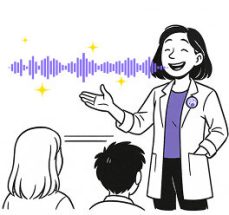
They teach like they always teach.
As the teacher narrates the room — a redirection, a win, a check-in, a note to follow up with a parent — Socrait seamlessly collects it in the background. No audio is stored, and student names are anonymized before any data reaches an AI model.

After class, the documentation is waiting.
Dated, organized, and ready for review and editing before anything is used or shared.
Your SIS, your IEP system, and your PBIS platform don't go away. Socrait feeds them the consistent, ground-level data they've been starving for without adding another data-entry job to your teachers' week.
What Socrait produces:
- Praises and warnings daily student tally
- MTSS tier 1 and PBIS-ready classroom observations
- Parent-communication drafts
- Class summaries, assignment changes, and reminders
- Student profiles with behavior tracking and summaries for context
- Behavior tracking over time with custom messages
- Engagement, participation, and attendance signals
Indiana-Aligned Use Cases
MTSS Tier 1 documentation, including K-8 math
Collect the Tier 1 day-to-day evidence, so decisions and progress monitoring rest on recent classroom observation rather than memory.
PBIS behavior support
Surface praise, redirection, and behavior patterns consistently across classrooms to support positive-climate work and behavior-system review.
Engagement, participation, and attendance intervention
Pair classroom-level signals with quick parent-communication drafts so follow-up is timely and documented.
Special education: FBA/BIP and parent communication
Make it easier for teachers to organize and revisit the observations behind FBAs, BIPs, manifestation discussions, and intervention follow-through using the student behavior profiles.
School improvement
Review school-wide behavior evidence that supports continuous-improvement objectives and annual plan review.
What Indiana Leadership Gets
Principals and assistant principals:
More consistent classroom-level visibility into praise, redirection, behavior patterns, and family-contact follow-up — without asking teachers to log more by hand.
Special-education directors:
A stronger documentation flow behind FBAs, BIPs, manifestation discussions, and progress monitoring, in exactly the settings where Indiana's materials emphasize data collection and documented processes.
MTSS and PBIS leads:
Patterns that surface sooner, so support conversations rest on recent classroom evidence rather than partial recall.
Teachers:
Relief from the mental load of remembering every incident, praise moment, observation detail, and parent follow-up after the bell rings.
Privacy and security with Socrait
- FERPA compliant. iKeepSafe certified.
- ISO 27001 certified for information and cybersecurity practices.
- Socrait does not record. It has been trained to listen.
- No audio is stored.
- Student names are anonymized before any data goes to AI models.
- No teacher or student data is sold or shared.
- Socrait is a Public Benefit Corporation. That is our legal structure, not a slogan.
Full security and privacy documentation is available for your IT and legal review before any conversation about deployment.
Socrait can help you make positive changes with the data that comes directly from classroom experiences
Indiana's direction is clear: identify needs earlier, use better data, strengthen tiered
supports, improve attendance, and sustain safe, positive learning environments. Those goals work only when
schools can turn daily classroom reality into usable information, without burning out their teachers.
Let’s meet and discuss how Socrait helps your Indiana schools strengthen student-support systems with better
classroom documentation and less teacher paperwork.