
Classroom evidence, without having to write it down.
California doesn't give teachers one workload law. It gives them a stack.
Each obligation in that stack ends up in the same place: on your teachers. And none of them are hard because of the form or the deadline. They're hard because of what has to go inside: dated, specific, teacher-observed evidence of what happened in the room. That evidence is what turns a record into something defensible, an intervention plan into something usable, and a parent conversation into something grounded in fact instead of recollection.
The problem is where that evidence starts, and how long it stays there. It begins in your teacher's head. It waits for a free moment to get written down, and the school day is built to never offer one. So the record comes out incomplete, inconsistent, or missing. Socrait builds the layer California already assumes exists: the one between what happened in class and the documentation that's supposed to capture it.
All without recording.
California’s compliance stack
...and the paperwork behind it
California doesn’t have one teacher workload law. It has a stack of them.
This cluster of obligations all land, in the end, on your teachers. None of these
obligations are the hard part. The hard part is what goes inside them: the specific, dated, teacher-observed
classroom evidence that makes a behavior record defensible, an IEP useful, and a parent conversation grounded in
what actually happened.
That evidence lives in your teachers’ heads until they have time to write it down, which leads to incomplete,
inconsistent, or missing data. Socrait creates the missing layer between what happened in class and the
documentation that follows it.
The state grades your district on data your teachers generate.
The California School Dashboard rates every district in five colors on chronic absenteeism and suspension, among other indicators. Red on either indicator sends a district to its county office or the California Collaborative for Educational Excellence for differentiated assistance and both indicators are built from the behavior data and attendance signals that start in a classroom. Your LCAP then has to show how you are responding, with school climate and family engagement among the local indicators you self-report.
- Praise-to-redirection patterns and behavior incidents captured as they happen
- Classroom context for the climate and engagement priorities your LCAP reports
- Cleaner source data feeding your Dashboard and continuous-improvement work
- Attendance and engagement signals preserved before they become a red indicator
Tiered support that runs on classroom evidence.
CDE frames California MTSS as one integrated framework that aligns academic, behavioral, and social-emotional supports and brings together RtI² and PBIS, supported by universal screening, problem-solving teams, and data-based decision making. None of that runs on end-of-week recollection. It runs on dated, specific, classroom-level evidence a Student Study Team or problem-solving team can read.
- Behavior, praise, and redirection patterns for Tier 1 review
- Intervention observations and response-to-support evidence for Tiers 2 and 3
- Trends an SST or problem-solving team can actually use
- Records ready to feed the SIS and MTSS workflow your district already runs
Special education clocks that punish a thin record.
California runs initial special education on a 15 / 60 rhythm: 15 calendar days from referral to deliver the assessment plan, and 60 calendar days from parental consent to hold the IEP meeting, determine eligibility, and develop the IEP. Progress toward IEP goals must be reported to families. Socrait does not replace your IEP system. It gives the team a clearer factual record before IEP meetings, behavior-support conversations, and the follow-up these rules require.
- Dated behavior history before behavior-support planning
- A clearer record before a behavioral emergency report has to be written
- Classroom-specific observations that make IEP progress reports actually describe a student
- Family-ready language for the communication these timelines require
How Socrait fits seamlessly between California classrooms and communication
Socrait listens to the teacher, not the students, and turns everyday narration into usable documentation. There is no audio recording and no new workflow to learn.

Press Stream when class starts.
The teacher activates Socrait manually. It listens only when they choose to start it, and they can stop at any time.
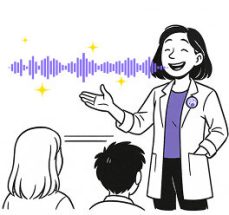
They teach like they always teach.
As the teacher narrates the room — a redirection, a win, a check-in, a note to follow up with a parent — Socrait seamlessly collects it in the background. No audio is stored, and student names are anonymized before any data reaches an AI model.

After class, the documentation is waiting.
Dated, organized, and ready for review and editing before anything is used or shared.
Your SIS, your IEP system, and your PBIS platform don't go away. Socrait feeds them the consistent, ground-level data they've been starving for without adding another data-entry job to your teachers' week.
What Socrait produces:
- Praises and warnings daily student tally
- MTSS tier 1 and PBIS-ready classroom observations
- Parent-communication drafts
- Class summaries, assignment changes, and reminders
- Student profiles with behavior tracking and summaries for context
- Behavior tracking over time with custom messages
- Engagement, participation, and attendance signals
California funding streams purchase Socrait.
We’ve mapped Socrait to the live California funding streams district leaders already manage. This is meant as a starting point for your chief business official or federal programs director, not as legal or budgetary advice.
Title IV-A — Student Support and Academic Enrichment
BEST FITTitle IV-A allowable uses include school climate, PBIS implementation, reducing exclusionary discipline, family engagement, and effective use of technology. Socrait fits multiple categories without competing with existing buys, and it is the cleanest California funding conversation.
LCFF Supplemental and Concentration
VIA YOUR LCAPSupplemental and concentration funds support services for unduplicated pupils and must advance the goals and actions in your LCAP. Where Socrait is tied to LCAP goals around attendance, climate, engagement, or behavior support for those student groups, it can fit. This requires a clear LCAP linkage, so confirm with the staff who write and defend your plan.
IDEA Part B
SPECIAL EDUCATIONWhen Socrait supports documentation, progress monitoring, behavior-support preparation, and parent communication for students with IEPs, it fits within IDEA Part B’s support-of-service framing. Confirm local allowability with your SELPA or special education director.
California Community Schools Partnership Program (CCSPP)
GRANT HOLDERS ONLYIf your district holds a CCSPP implementation grant, the integrated-student-supports pillar may accommodate documentation and family-engagement tools. This stream applies only to grantees and funds community-school coordination, so treat it as a narrow, district-specific conversation, not a general fit.
General Fund + LCAP base
LOCALMany districts fund teacher-support tools through general fund or base LCFF lines tied to strategic plan goals around retention, behavior support, and family engagement. The right path where categorical routing is slower than the problem.
Why California leadership is paying attention.
A UCLA/CTA survey of more than 4,600 California teachers found acute stress, dissatisfaction, and significant intent to leave, against the backdrop of a persistent teacher shortage, including a severe shortage in special education. Documentation drag is part of that picture. It shows up in turnover, in late IEP paperwork, in attendance conversations that came too late, and in incidents that get under-documented because the teacher was already stretched thin.
California’s accountability system then grades the district on exactly those outcomes: behavior patterns, climate, and engagement. Socrait doesn’t fix teacher retention. But it removes one specific, named source of the paperwork burden those systems create, and does it without adding more to a teacher’s day.
Privacy and security with Socrait
- FERPA compliant. iKeepSafe certified.
- Socrait does not record. It has been trained to listen.
- No audio is stored.
- Student names are anonymized before any data goes to AI models.
- No teacher or student data is sold or shared.
- Socrait is a Public Benefit Corporation. That is our legal structure, not a slogan.
Full security and privacy documentation is available for your IT and legal review before any conversation about deployment.
What California Leadership Gets
Building principals & APs
A building-level view of praise-to-warning ratios, behavior incidence types, and trends over time. Socrait reduces the paperwork burden on teachers, one of the top reasons California teachers leave the profession.
MTSS, attendance & climate leads
The classroom-level attendance signals and longitudinal behavior record that sits underneath your Dashboard indicators and LCAP, captured consistently instead of reconstructed after the day ends.
Special education directors and SELPAs
The dated, classroom-specific observations that make IEP progress reports actually describe a student, plus a real paper trail under behavior-support and behavioral-emergency conversations California’s rules require. Your existing IEP system, better fed.
Chief business officials and federal programs directors
Socrait fits multiple live California and federal funding streams as a documented, auditable use case. Detailed documentation that comes directly from the classroom, without adding to teacher workload.
Your teachers
A way to document behavior, praises, warnings, and classroom experiences without losing instructional time. A safety net, a trusted assistant, and a reason they don’t have to stay late.
See it in your district.
Bring your MTSS lead, your attendance or climate lead, your special education director or SELPA representative, your chief business official, a principal, and a teacher you trust. We’ll run a live classroom demo, show you what ends up in the dashboard, walk through the California funding map for your use case, and answer your IT director’s questions before they ask.
FAQ
No. Student Study Team and Student Success Team processes are common local general-education practices, not one statewide mandate, and PBIS lives inside California MTSS rather than as a standalone statute. The legal anchors are the School Dashboard and LCAP under LCFF, and the special education timelines in the Education Code.
No. Your SIS and CALPADS remain your official systems of record and submission. Socrait improves the upstream classroom documentation those systems depend on.
Indirectly, by improving the quality and consistency of the attendance signals and behavior record those systems draw on. Socrait does not calculate or report your indicators; it helps your teachers capture cleaner source data.
Districts already committed to MTSS, schoolwide PBIS, and centralized student support workflows.