
Turn what teachers already say in class into documentation that supports Florida's early warning, MTSS, and student - support workflows.
Socrait is a voice-powered class companion. It listens to the teacher's voice while they teach and turns it into organized notes, behavior patterns, parent-communication drafts, and class summaries your teams can actually use. No audio is ever recorded or stored, and student names are anonymized before any data is processed. The result: more timely classroom documentation to support early warning, MTSS, and student-support workflows.
Florida law requires schools to identify students early, describe intervention strategies, and coordinate supports.
Florida law addresses early warning systems, school-based mental health planning, and related intervention work. Socrait is built to support that work at the classroom level, where so much of the evidence originates and so much of it gets lost.
Early warning systems (K-8)
Florida law requires schools serving kindergarten through grade 8 to operate an early warning system tracking indicators including: attendance below 90 percent, suspensions, course failure in English language arts or mathematics, Level 1 scores on statewide assessments, and substantial reading or mathematics deficiency. Schools must describe the intervention strategies they employ, and a school-based team (in consultation with parents) must determine interventions when a student exhibits two or more indicators.
School-based mental health assistance
Every Florida district must operate a school-based mental health assistance program, submit an approved annual plan organized around a multitiered system of supports, deliver evidence-based assessment and intervention services, and file annual program outcome and expenditure reports. Districts coordinate this work through a designated point of contact who maintains the related records and reporting.
Supported statewide frameworks
Florida advances this work through the Florida Department of Education's MTSS framework and a statewide technical-assistance network, including the Florida PBIS Project, the Problem Solving/Response to Intervention Project, Student Support Services, and SEDNET. PBIS and MTSS are state-supported frameworks rather than a single universal mandate, and Florida's PBIS resources consistently emphasize strong Tier 1 systems, classroom consistency, positive school climate, and regular behavior data collection.
Socrait is designed to complement—not replace—your SIS, IEP, or PBIS workflows by organizing classroom-level documentation.
Why this matters for Florida educators.
Every one of these requirements depends on the same thing: timely, usable information from the classroom. Early warning teams need to know what interventions a teacher actually tried. Attendance follow-up works better when the teacher does not have to reconstruct the week from memory. MTSS and mental-health conversations are stronger when dated, specific classroom observations are already on the table.
But teachers are the most stretched part of the system. Asking them to teach all day and then document everything by hand, accurately, after dismissal, is how evidence ends up late, thin, or missing. That documentation burden can add to teacher workload and fatigue. Socrait closes the gap between what happens in the room and what your teams need on paper, without adding another clipboard, spreadsheet, or end-of-day memory exercise.
HOW SOCRAIT FITS
Socrait listens to the teacher, not the students, and turns everyday narration into usable documentation. There is no audio recording and no new workflow to learn.

Press Stream when class starts.
The teacher activates Socrait manually. It listens only when they choose to start it, and they can stop at any time.
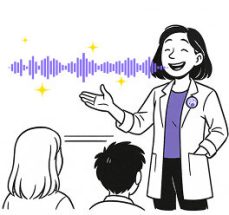
They teach like they always teach.
As the teacher narrates the room — a redirection, a win, a check-in, a note to follow up with a parent — Socrait seamlessly collects it in the background. No audio is stored, and student names are anonymized before any data reaches an AI model.

After class, the documentation is waiting.
Dated, organized, and ready for review and editing before anything is used or shared.
Your SIS, your IEP system, and your PBIS platform don't go away. Socrait feeds them the consistent, ground-level data they've been starving for without adding another data-entry job to your teachers' week.
What Socrait produces:
- Praises and warnings daily student tally
- MTSS tier 1 and PBIS-ready classroom observations
- Parent-communication drafts
- Class summaries, assignment changes, and reminders
- Student profiles with behavior tracking and summaries for context
- Behavior tracking over time with custom messages
- Engagement, participation, and attendance signals
How Florida can benefit from Socrait
Early warning system documentation
Collect the intervention strategies teachers are actually using, so the descriptions your K-8 teams need are grounded in classroom reality rather than recollection.
MTSS problem solving
Bring tier 1 dated observations and behavior patterns into tiered conversations, making it easier to decide whether a support should continue, change, or intensify.
PBIS and MTSS consistency
Give building leaders clearer visibility into classroom trends and recognition patterns that strong student support implementation depends on.
Mental-health and student-support meetings
Surface the early classroom signals that often help teams identify concerns sooner and communicate more clearly, feeding (not replacing) your case-management workflow.
Parent communication
Turn what a teacher observed into a clear, ready-to-send draft, so family outreach happens sooner and more consistently.
What Florida leadership gets
Principals and assistant principals:
Stronger Tier 1 consistency, clearer classroom trend visibility, and faster follow-up on building-level behavior and climate, without spending teacher planning time on paperwork OR having to spend hours in classroom observation.
Special-education directors:
More consistent, dated classroom documentation that strengthens the evidence behind support decisions and meeting preparation.
MTSS and PBIS leads:
The regular, classroom-level data and intervention records that data-based problem solving and fidelity monitoring depend on.
Mental-health coordinators and student-services leaders:
Better handoffs and richer intervention context, preserving the classroom observations that help teams notice concerns earlier.
Teachers:
Far less memory load, so documentation is timely and complete, and more of the day stays focused on students.
Privacy and security with Socrait
- FERPA compliant. iKeepSafe certified.
- ISO 27001 certified for information and cybersecurity practices.
- Socrait does not record. It has been trained to listen.
- No audio is stored.
- Student names are anonymized before any data goes to AI models.
- No teacher or student data is sold or shared.
- Socrait is a Public Benefit Corporation. That is our legal structure, not a slogan.
Full security and privacy documentation is available for your IT and legal review before any conversation about deployment.
Socrait is your next step to support teachers and connect classrooms to accurate documentation.
If your district is working to strengthen early warning, MTSS, PBIS, attendance follow-up, and student support while easing the documentation load on teachers, Socrait can help connect classroom reality to the systems your teams already use. Bring together a principal, an MTSS or PBIS lead, a student-services leader, and a teacher, and see how it works.