
Strengthen MiMTSS, PBIS, and whole-child support — without adding to your teachers' day.
Michigan schools are building more connected systems for student support, and those systems run on classroom-level evidence. Socrait is a voice-powered class companion that listens to the teacher while they teach and turns what they say into clean documentation: behavior notes, praise and redirection patterns, parent-communication drafts, class summaries, and intervention-ready observations. It is teacher-controlled, stores no audio, and is built to feed the systems your district already uses.
What Michigan is Asking Schools to do — and Where Socrait Fits
Michigan's student-support agenda is organized around a whole-child, data-informed
Multi-Tiered System of Supports. Across MiMTSS, PBIS, EWIMS, attendance improvement, SEL, and whole-child
planning, the emphasis is consistent: strong Tier 1 universal supports, comprehensive screening and assessment,
and continuous data-based decision making.
Here's how the major pieces fit together — and what is genuinely required versus what Socrait simply supports.
MiMTSS (supported)
The Michigan Department of Education frames MTSS as a comprehensive framework built around five essential components: team-based leadership, a tiered delivery system, selection and implementation of instruction and interventions, a comprehensive screening and assessment system, and continuous data-based decision making. Implementation support is delivered statewide through the MiMTSS Technical Assistance Center (formerly MIBLSI). Socrait helps teachers collect the classroom-level evidence these components depend on.
PBIS within MTSS (supported)
In Michigan, PBIS is not a separate initiative — it sits inside MTSS as a proactive, team-based framework focused on prevention, prosocial skill development, and data-based problem-solving. Socrait helps make Tier 1 behavior evidence easier to collect and review.
EWIMS (supported)
The Early Warning Intervention and Monitoring System is an evidence-based process used within a district's secondary MTSS framework, supporting attendance, social-emotional and behavioral well-being, and course performance, and helping teams match student needs to interventions and monitor progress. Socrait helps surface the timely classroom signals that feed that work.
Section 31a at-risk funding (compliance documentation)
This is the most concrete documentation context. Districts using Section 31a at-risk funds must align their use with a needs assessment and the MTSS model, identify and document at-risk eligibility, and maintain evidence for program monitoring. MDE's Section 31a monitoring indicators serve as documentation for compliance review and reference needs assessments, attendance monitoring, written at-risk eligibility procedures, and continuous improvement planning. Socrait does not satisfy these requirements on its own, but Socrait helps schools produce the consistent, dated classroom evidence that supports them.
MICIP (supported)
The Michigan Integrated Continuous Improvement Process is MDE's pathway for districts to assess whole-child needs, build plans, and coordinate funding. Socrait helps keep the classroom-level reality visible inside that cycle.
Whole child and SEL (supported)
Michigan's whole-child definition spans cognitive, physical, behavioral, social, and emotional dimensions, supported by statewide tools such as the Michigan Profile for Healthy Youth for needs assessment. Socrait helps collect the everyday classroom observations that round out the picture between formal surveys.
What Michigan does not do
Michigan sets frameworks, funds implementation, and attaches documentation expectations to specific programs — but it does not prescribe a single statewide teacher behavior-log format or require any specific classroom documentation tool. Districts decide how to gather classroom-level evidence. Socrait is one efficient way to gather this classroom-level evidence.
The evidence is expected. The time to organize it isn't there.
Every framework above assumes the same thing: that someone is consistently capturing what happens
in the classroom. The praise that reinforced a behavior. The redirection that worked. The pattern building over
three weeks. The moment a parent needs to hear about.
In practice, that evidence is usually reconstructed after dismissal — if it gets recorded at all. Teachers are
asked to teach all day and then become data clerks at night, and the documentation that MTSS, PBIS, EWIMS, and
intervention review depend on is often the first thing to slip.
That gap has real costs: weaker Tier 1 data, thinner paper trails under behavior and intervention decisions,
slower parent follow-up, and one more reason for good teachers to burn out. Michigan frames professional
learning and reduced administrative burden as part of its educator-retention strategy. Lightening the
documentation load on teachers fits squarely inside that goal.
A class companion that works the way teaching already works
Socrait is teacher-controlled and built around three simple steps:

Press Stream when class starts
The teacher starts a session. Socrait listens to the teacher's voice — not the students'.
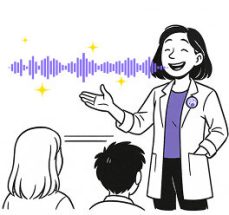
They teach like they’ve always taught
No new routine, no clicking through forms mid-lesson, no audio stored. Student names are anonymized before any data is processed.

After class, the data is waiting
What the teacher said becomes organized documentation, ready to review, edit, and use.
What Socrait produces
- Behavior notes and observations
- Praise and warning/redirection patterns
- Parent-communication drafts
- Class summaries
- MTSS/PBIS-ready observations and intervention notes
- Attendance and engagement signals
Socrait does not replace your SIS, IEP system, or PBIS platform. Socrait feeds these systems the classroom-level evidence they can't generate on their own.
Michigan-aligned use cases
MTSS and EWIMS documentation
Capture the timely classroom observations and intervention-related evidence that feed Tier 1 reflection, secondary MTSS work, and EWIMS progress monitoring.
PBIS and Tier 1
Make praise patterns, redirection, and behavior trends easier to record and review, strengthening data-based problem-solving at the universal tier.
Attendance and engagement
Surface the early engagement and participation signals that often precede attendance and course-performance concerns.
Section 31a at-risk documentation
Help build the consistent, dated classroom evidence that supports at-risk identification, intervention follow-through, and Section 31a program monitoring — evidence the school is responsible for maintaining.
Special education and parent communication
Strengthen the classroom paper trail under behavior-support planning, FBA/BIP follow-through, and family follow-up, where Michigan resources emphasize monitoring student response to interventions and adjusting supports based on data.
MICIP continuous improvement
Keep classroom-level reality visible inside the district's whole-child needs assessment and improvement planning cycle.
What Michigan Leadership Gets
More consistent classroom-level information for Tier 1 reflection, behavior trend reviews, and follow-up conversations with staff and families — without standing over teachers' shoulders.
A stronger, dated classroom record under behavior-support planning, FBA/BIP follow-through, and intervention discussions, feeding your existing IEP processes rather than competing with them.
A more reliable first layer of evidence for fidelity, progress monitoring, and data-based decision making across tiers.
Cleaner, more consistent classroom documentation to support needs assessment, intervention follow-through, and Section 31a program monitoring obligations.
Less end-of-day paperwork, fewer reconstructed-from-memory notes, and more of the day actually captured — so the documentation is done before they walk out the door.
The praises and the warnings were very enlightening for me as a teacher to be like, whose names am I saying over and over again? Sometimes it's the same kids and it's warranted. It's for me to look at at the end of the day, and ask myself, who am I not praising when I should be praising?
Privacy and security with Socrait
- Listens to the teacher, not the students. Socrait captures the teacher's voice while they teach.
- No audio stored. Socrait does not record and stores no audio.
- Student names anonymized. Names are anonymized before any data is sent to AI models.
- Your data stays yours. No student or teacher data is ever sold.
- FERPA compliant and iKeepSafe certified.
- ISO 27001 certified for information and cybersecurity practices.
- A Public Benefit Corporation. Socrait is built to serve teachers and students, with that mission written into how the company operates.
Full security and privacy documentation is available for your IT and legal review before any conversation about deployment.
See what your teachers' words can do — before they leave the building.
Bring your building leader, MTSS/PBIS lead, special-education leader, and one classroom teacher to a live demo. We'll show how Socrait turns everyday classroom observations into cleaner documentation, faster follow-up, and more usable evidence for the Michigan systems your schools are already working to implement — with less friction for the people doing the teaching.