
The classroom documentation layer behind stronger behavior and support systems in Arizona schools.
Socrait is a voice-powered class companion. It listens to the teacher while they teach, never to students, and turns what they say into behavior notes, praise and warning patterns, parent-communication drafts, class summaries, and MTSS- and PBIS-ready observations. No audio is recorded or stored, and student names are anonymized before any data is processed. The result is timely, usable classroom evidence without another spreadsheet, clipboard, or after-hours documentation chore.
ARIZONA'S IMPLEMENTATION PRIORITIES
Arizona schools are not responding to a single statewide PBIS law. They are working inside a broader support environment shaped by the Arizona Department of Education: ADE presents PBIS as a proactive, schoolwide approach to building the behavioral supports and social culture students need to succeed, and Arizona's MTSS framework describes a tiered, data-driven whole-child system that matches academic, social-emotional, and behavioral supports to student need.
Arizona is also investing in implementation capacity. ADE's Multi-Tier Behavior Supports (MTBS) program is a multi-year training series that helps district, charter, and school teams build schoolwide positive behavior management practices, built on School-Wide PBIS evidence-based elements.
ADE's school-improvement guidance for identified schools points to data-based decision-making, evidence-based interventions, stronger Tier 1 core instruction, regular progress monitoring, and recordkeeping. More targeted documentation expectations appear in special education and evaluation contexts: when behavior impedes a student's learning, IEP teams are expected to consider positive behavioral interventions and supports, and MTSS- or RTI-based evaluation processes call for tier-by-tier progress-monitoring evidence, proof that interventions were implemented with fidelity, and parent notification in certain circumstances.
The throughline is consistent. Across PBIS, MTSS, MTBS, school climate and wellness guidance, and school improvement, Arizona schools are being asked to run stronger support systems and to back them with timely classroom data. Socrait aligns with that direction by helping schools produce classroom-level evidence as part of how teachers already work.
WHY IT MATTERS FOR ARIZONA EDUCATORS
These systems only work when teachers can produce timely, usable classroom evidence, and
that is exactly where the burden lands. Behavior notes, engagement patterns, intervention history, and family
follow-up are the documentation that sits underneath PBIS, MTSS, school climate work, and early intervention,
and most of it is reconstructed from memory after dismissal, if it gets captured at all.
That burden has
a cost. Arizona's own statewide teacher-retention work shows that nearly one in five teachers recently left
teaching or moved to a different district in a single year. Documentation is not the only driver, but reducing
after-hours follow-up while strengthening support systems is a credible, practical goal for Arizona leaders.
When teachers spend less time reconstructing the day, schools get better evidence and teachers get time
back.
HOW SOCRAIT FITS
A simple workflow that runs inside the class teachers already teach:

Press Stream when class starts.
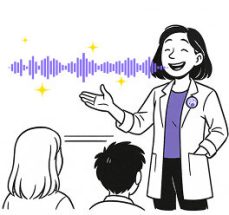
Teachers teach like they’ve always taught.

After class, the data, insights, and actions are waiting.
From the teacher's spoken observations, Socrait produces:
- Behavior notes tied to dates and patterns
- Praise and warning patterns across the class and over time
- Parent-communication drafts ready for review and follow-up
- Class summaries
- MTSS- and PBIS-ready observations
- Attendance signals
No audio is recorded or stored. Student names are anonymized before any data is processed. The teacher reviews and controls every work product. Socrait does not replace your SIS, IEP system, or PBIS platform. It feeds them classroom-level evidence those systems depend on.
ARIZONA-ALIGNED USE CASES
MTSS documentation
Capture the tier-by-tier observations, intervention notes, and progress signals that make data-based problem solving possible, and make Tier 2 and Tier 3 conversations more specific.
PBIS and Tier 1
Strengthen consistency across classrooms with steady, comparable behavior and praise/warning data that supports schoolwide positive behavior practices.
Student-support and special education meetings
Provide clear, dated observations that support intervention history, FBA and behavior-plan discussions, and IEP-team conversations where behavior is part of the student's need.
Parent communication
Turn what happened in class into review-ready family communication drafts, so follow-up happens while the details are still fresh.
School improvement
Give identified schools the ongoing classroom evidence and recordkeeping that integrated action plans and regular monitoring call for.
Attendance and engagement
Surface engagement patterns and attendance signals as part of normal classroom use.
WHAT ARIZONA LEADERSHIP GETS
Better visibility into classroom patterns across the building and faster follow-through on support needs.
Clearer, dated observations that support intervention history, FBA and behavior-plan discussions, and IEP-team conversations.
More consistent classroom evidence for problem-solving conversations and tiered decisions.
Support-ready documentation without the after-hours reconstruction, so the work of capturing classroom evidence stops competing with the work of teaching.
Privacy and security with Socrait
- Teacher-controlled. Socrait listens to the teacher, never to students, and the teacher reviews and controls every work product.
- No audio recorded or stored.
- Student names are anonymized before any data is processed by AI models.
- No student or teacher data is ever sold.
- FERPA compliant and iKeepSafe certified.
- ISO 27001 certified for information and cybersecurity practices.
- Socrait is a Public Benefit Corporation, accountable to its mission of supporting teachers and students.
See what Arizona-ready classroom documentation can look like.
Bring your principal, your MTSS or PBIS lead, your special education director, and one classroom teacher. We will show how Socrait helps your schools reduce documentation burden while giving your team stronger classroom-level evidence for behavior support, student follow-up, and family communication.