
Collect the classroom evidence Oklahoma's support systems run on — in the teacher's own words.
Socrait is a voice-powered class companion. It listens to the teacher while they teach and turns what they say into documentation: behavior notes, praise and redirection patterns, parent-communication drafts, and class summaries that strengthen OKMTSS, positive behavior work, counseling, school-based mental health, and special-education records. No audio is recorded, and student names are anonymized before any data reaches an AI model.
THE OKLAHOMA LANDSCAPE
Across Oklahoma, student support is treated as a connected data-and-intervention system, not a single mandate. The strongest documentation pressure falls on the classroom, where teachers are expected to collect evidence in real time and feed it to the teams and systems that act on it.
OKMTSS
The Oklahoma State Department of Education defines OKMTSS as a continuum of evidence-based, systemic practices that use regular observation for data-based decision-making. The framework centers leadership support, sustainable teaming, and evidence-based practices across Tier 1, Tier 2, and Tier 3, and it explicitly includes behavioral and mental-health practices that support classroom climate and culture. It calls for multiple data sources at all tiers and progress monitoring at the student, class, school, and district levels. OSDE is also extending OKMTSS on EDPlan to districts, organizing behavior and attendance data alongside academic screeners.
PBIS and behavior support within MTSS and mental health
Oklahoma's positive-behavior work lives inside OKMTSS, school-based mental health, and grant-supported behavior systems rather than a single standalone PBIS statute. OSDE's student mental health resources point schools to tools including the Center on PBIS materials, Behavioral Intervention Services and Supports, and the PAX Good Behavior Game, with screening, multidisciplinary teams, data-based decision-making, and continuous improvement framed inside an MTSS structure.
Chronic absenteeism — a Report Card indicator
Oklahoma defines chronic absenteeism as missing 10 percent or more of school days and makes it an indicator on the Oklahoma School Report Card. Attendance is therefore a highly visible state accountability measure, and schools are encouraged to identify local needs, build partnerships, and act on attendance early.
School improvement and the 5Essentials
OSDE's Office of School Support builds Continuous Improvement Plans from needs assessments and schoolwide data, and promotes the 5Essentials framework — Effective Leaders, Collaborative Teachers, Ambitious Instruction, Supportive Environment, and Involved Families — as the conditions that drive sustainable improvement.
Special education and student-support planning — where documentation is required.
Special-education timelines are firm school obligations: the initial evaluation must be completed within 45 school days of parent consent, the initial IEP must follow within 30 calendar days of an eligibility determination, and IEPs must describe how progress is measured and how and when parents are informed. Intervention records are expected to document fidelity, and intervention processes cannot delay an evaluation when a disability is suspected. Oklahoma also requires annual dropout reporting for grades 7-12, and districts operating alternative education programs are expected to build them around 16 research-based components, including clear measurable goals, counseling and social-service supports, and individualized graduation plans. Districts are likewise being asked to develop and submit a comprehensive school counseling framework to OSDE.
Some of these are firm requirements tied to the school. Much of the rest — OKMTSS, behavior supports, SEL, school-climate, and attendance-improvement work — is implementation guidance, technical assistance, and grant-connected support. Socrait is built to strengthen the classroom documentation layer underneath all of it.
WHY IT MATTERS FOR OKLAHOMA EDUCATORS
Socrait helps Oklahoma schools implement responsible AI practices with built-in privacy protections, FERPA-compliant safeguards, and teacher oversight. No classroom audio is stored. Teachers remain in control of all AI-generated content. Designed as a teacher operational tool, not a student shortcut, Socrait supports documentation, family communication, and reduced teacher workload within district technology and AI guidelines.
When that documentation is late, inconsistent, or reconstructed from memory at the end of the day, the whole support system weakens — and the burden lands squarely on teachers. Oklahoma's own first-year mentorship work prioritizes classroom management, engagement, routines, and data-driven instruction, and the state has been clear that responsible tools should streamline administrative tasks, not add to them. Socrait reduces the after-the-fact documentation load without weakening professional judgment, privacy, or district oversight.
HOW SOCRAIT FITS
Socrait listens to the teacher, not the students, and turns everyday narration into usable documentation. There is no audio recording and no new workflow to learn.

Press Stream when class starts.
The teacher activates Socrait manually. It listens only when they choose to start it, and they can stop at any time.
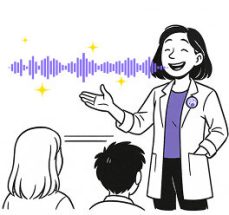
They teach like they always teach.
As the teacher narrates the room — a redirection, a win, a check-in, a note to follow up with a parent — Socrait seamlessly collects it in the background. No audio is stored, and student names are anonymized before any data reaches an AI model.

After class, the documentation is waiting.
Dated, organized, and ready for review and editing before anything is used or shared.
What Socrait produces: behavior notes, praise and warning patterns, parent-communication drafts, class summaries, MTSS/PBIS-ready observations, student-support meeting prep, and attendance signals.
Socrait does not replace your SIS, your IEP system, or your PBIS platform. Socrait feeds these platforms better raw material — dated classroom observations, consistent behavior notes, clearer intervention histories, and timely family-communication drafts.
OKLAHOMA-ALIGNED USE CASES
OKMTSS documentation and progress monitoring.
Collect the teacher-observed evidence behind Tier 1, Tier 2, and Tier 3 conversations — what was tried, what changed, how the student responded, and what the team should do next — aligned with OKMTSS's emphasis on multiple data sources and progress monitoring across tiers.
PBIS and Tier 1 behavior supports.
Make it easier to record behavior notes, reinforcement and redirection patterns, class-level trends, and climate-and-culture observations that support positive-behavior implementation within OKMTSS and school-based mental health.
Chronic absenteeism and attendance.
Surface attendance concerns, missed-instruction patterns, and engagement notes early enough for teams to respond — useful where attendance is a Report Card indicator and is tracked alongside behavior in OKMTSS on EDPlan.
Parent communication and student-support meetings.
Turn what the teacher actually observed into clear, factual, teacher-reviewed family-communication drafts, and walk into MTSS meetings, counseling conversations, and special-education reviews with dated classroom evidence instead of reconstructed memories.
School improvement.
Build a steadier stream of classroom-level evidence to inform needs assessments, Continuous Improvement Plans, and the "supportive environment" conditions at the center of the 5Essentials framework.
WHAT OKLAHOMA LEADERSHIP GETS
Principals and assistant principals:
Consistent, dated documentation of behavior and classroom climate across the building, ready for teams, families, and improvement planning.
Special-education directors:
Clearer intervention histories, fidelity-relevant notes, and progress evidence that support evaluation, IEP, and parent-communication obligations — without slowing down the people doing the teaching.
MTSS leads:
Real classroom-level data flowing into tiered conversations and progress monitoring, instead of evidence reconstructed after the fact.
Counselors and student-support staff:
Better-prepared meetings and a clearer picture of what teachers are seeing, supporting coordinated, data-informed counseling work.
Teachers:
The documentation gets done in their own words, while they teach, instead of after hours.
Privacy and security with Socrait
- No audio is recorded or stored. Socrait listens only when the teacher starts it, and the teacher can stop at any time.
- Teacher-controlled. Activation is manual, and teachers can delete class data.
- Student names are anonymized before any data is processed by an AI model.
- No student or teacher data is sold.
- FERPA compliant and iKeepSafe FERPA certified. Socrait operates as a school official under FERPA and signs district and state data privacy agreements where required.
- A Public Benefit Corporation, built to support teachers and the systems schools already rely on with human review and local control at every step.
If your district is strengthening OKMTSS, behavior supports, attendance response, counseling, school-based mental health, or special-education documentation, Socrait helps your teachers collect better evidence with less after-hours paperwork. Bring your MTSS lead, a building administrator, a counselor or student-services leader, and a special-education representative, and we'll show you how Socrait fits into the systems you already use.