Soundbytes is a weekly newsletter that explores the reality of teaching in an AI world.
Subscribe to receive it in your inbox each week.
One thing I’ve been wrestling with this year is how often students get “stuck” before they’ve even begun. I’d hand out what I thought was a clear, straightforward task – answer these 5 questions about a video we just watched – and a surprising number of students would stall out.
And this was despite using some best practices:
I use engaging questions to “hook” students on the topic.
I pause it and ask them to guess what will happen next or to connect ideas.
I give them access to rewatch the video or read the transcripts.
And still, about one minute after passing out the questions, I hear, “Dr. Andersen, can you help me? I don’t know the answer to this question.” After the fifth student, it’s tempting to chalk it up to learned helplessness.
But then I saw a session by Sarah Ward at the Pearson ADHD Virtual Conference. She said something that changed my perspective: “You’ve got to give them JOBS, not tasks,” and she explained why. Many students struggle because they lack a strong nonverbal working memory system — the “mental movie” that lets them picture what they’re about to do.
Self-regulation starts when students “mime the idea” in their minds, mentally rehearsing a future action like a “trial and error” run of a task. This mental image is generated by non-verbal working memory. Once the image is created, students can use self-talk (verbal working memory) to direct their actions. In other words, seeing the mental movie comes first, then narrating it to yourself.
Students with weak executive function skills often have reduced visual imagery and disorganized planning. They depend on lists, rubrics, or repeated instructions (verbal working memory) because they can’t picture the finished product. Without a visual anchor, words drift.
When Ward said, “If they can’t visualize the end, the task is just noise,” I felt like she had just summarized a third of my classroom. I finally saw why my detailed instructions were falling flat: those tasks were just fog—no mental movie, no visual anchor, no episodic memory to latch onto.
Suggested Resources:
One of the biggest pain points in my Technology & Society class is video comprehension. We watch a lot of real-world explainer videos—how dams work, how wastewater treatment happens, how cargo ports function. The content is fantastic. Yet, getting middle schoolers to remember anything from them sometimes feels like squeezing water out of a textbook.
After watching Ward’s session, I finally understood why: students aren’t watching the video with a visualized job in mind. They have no mental movie of what they are supposed to be doing while the video plays.
“Watch the video” is not a job. It’s an activity with no visible endpoint. Ward’s line — If they can’t visualize the end, they can’t begin — hit me pretty hard. It describes my video problem exactly.
As I design my class for next semester, I’m shifting video-watching into a set of visualizable roles, each with a concrete “look” and sample outputs. The goal is to anchor their attention in a job identity, not a vague instruction.
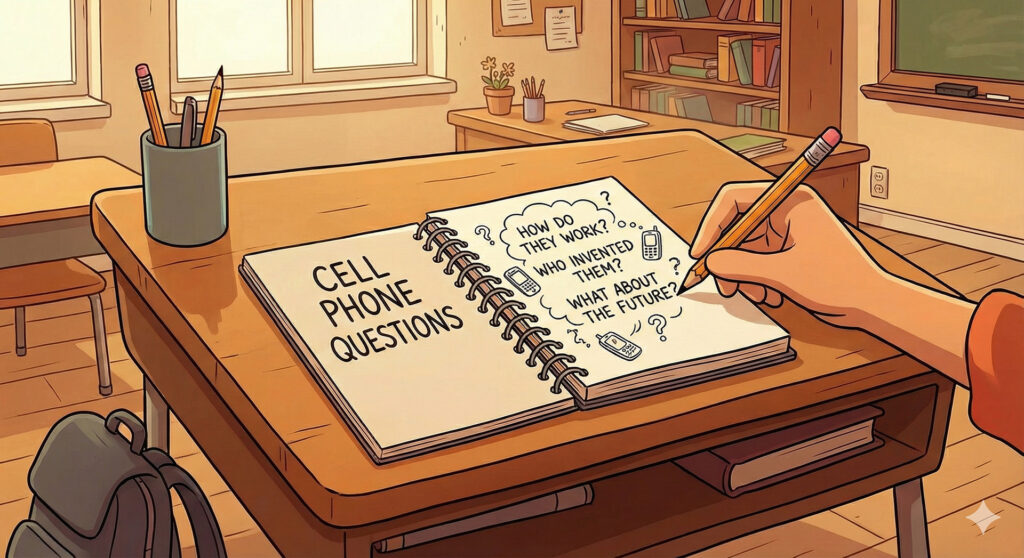
Before the video, decide what you’re curious about and prepare your “mental movie” for watching
Write down questions you hope the video will answer, or something you already wonder about the topic
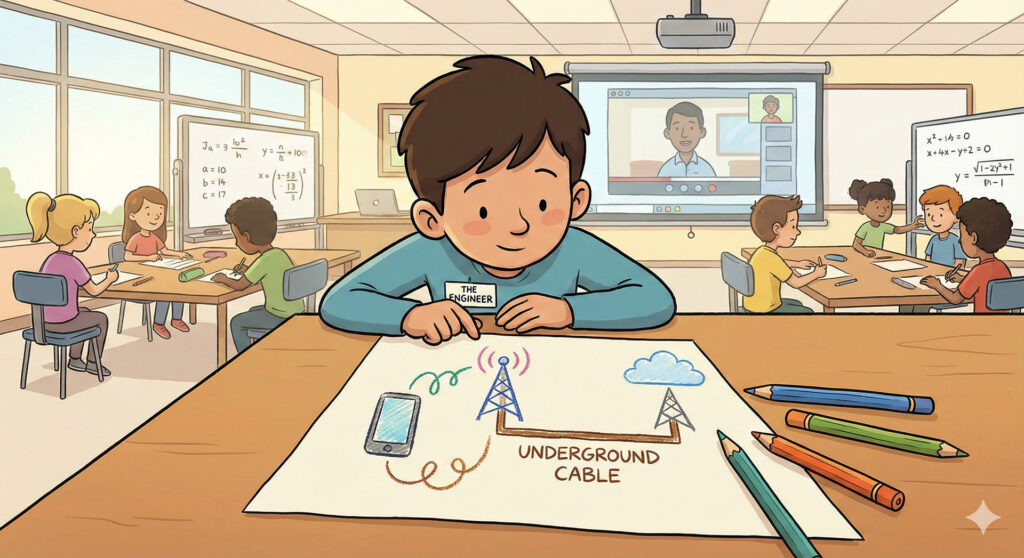
help your group understand the science and engineering of how something works
Sketch the diagrams you saw, write down the process, or note a timestamps for things that are complicated to write quickly
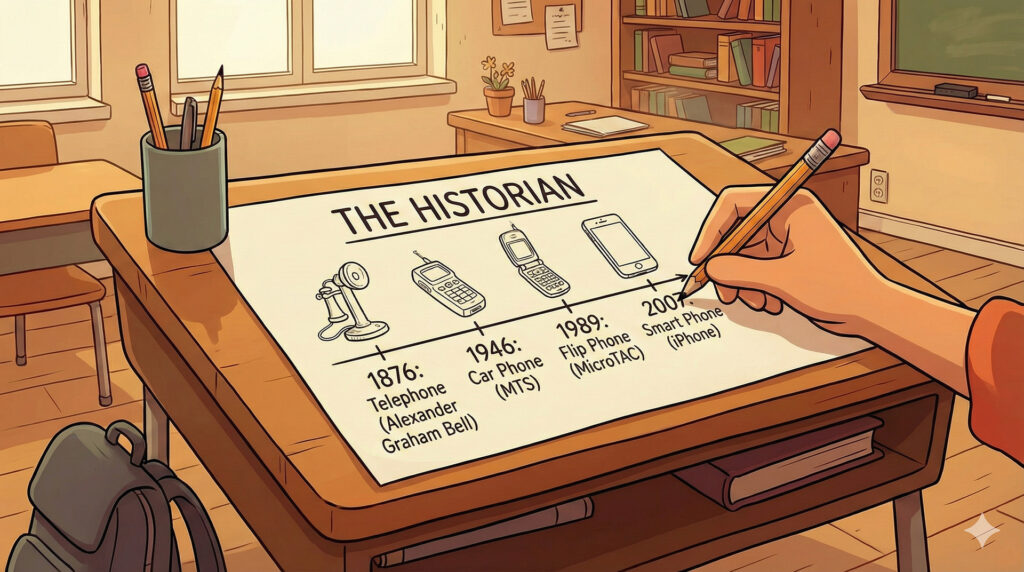
Help your group recall what we did before, when events took place, and the key moments or turning points along the way
Write down a timeline sketch, major events in order, and any “before/after” changes mentioned in the video.
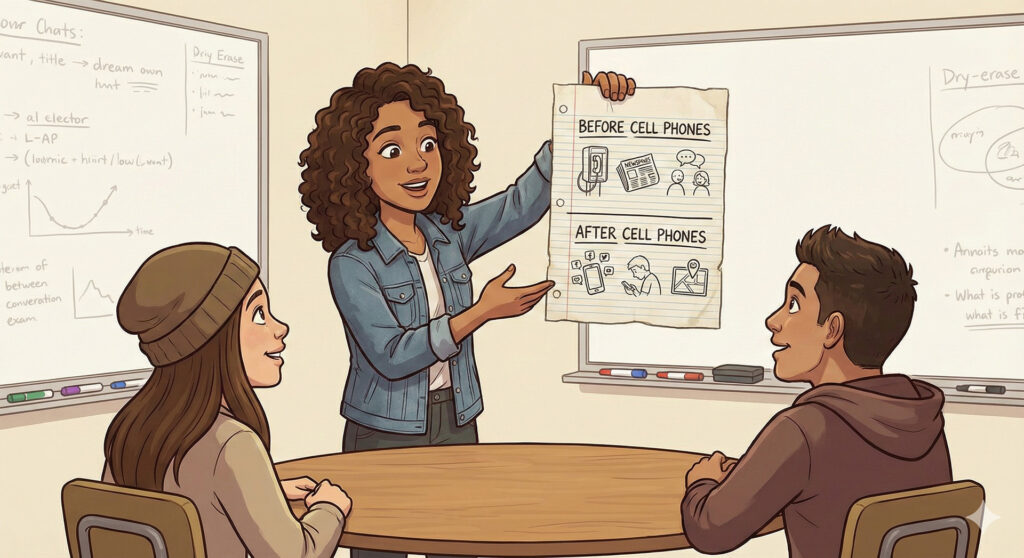
Help your group understand how people, work, and culture changed with this technology
Write down how people lived and worked before, how their lives changed after, and how did society or culture change
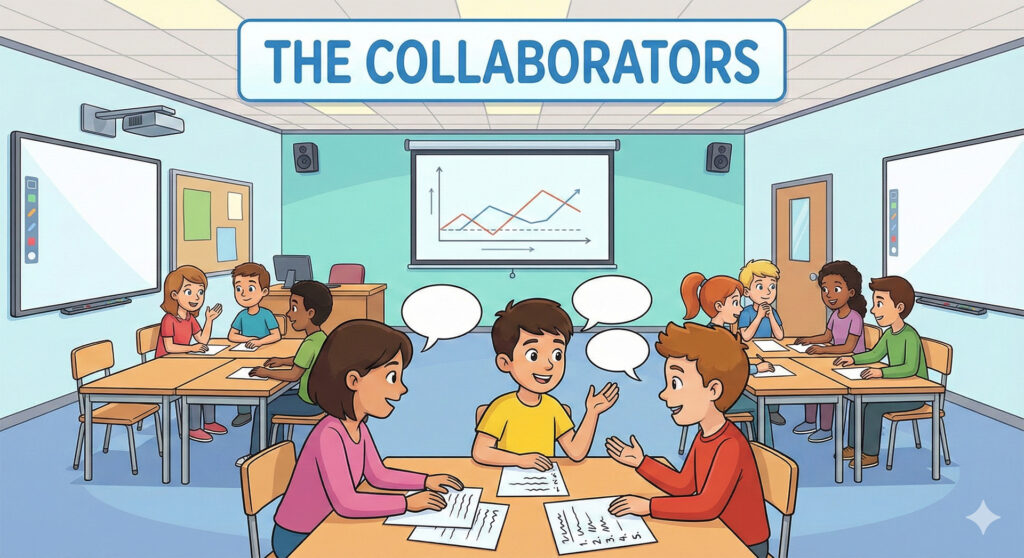
combine insights from group members to show what you learned
Out loud: Ask each other questions, discuss what you heard, confirm or question what others say Write down: short answers using vocabulary from the video and referring to visuals from diagrams
Now, each role has a visual anchor and a finished “look.” When Ward says students need the mental movie before they can act, this is what she means. And now that I’ve seen it through her lens, I can’t unsee it.
My students don’t need more pausing. They don’t need more transcripts. They need a visible role while the video is playing.
And honestly, I think it’s going to help. When students know who they are during a video, they know what jobs they need to do while watching. It’s not Tik-Tok. It’s the work of learning.
We’re out of videos to watch for this semester, so I’ll let you know how it goes next semester!
Grab your favorite beverage and take 10-15 minutes and read for yourself: The EdTech Revolution has Failed, by Jared Cooney Horvath.
There are a few quotes in this week’s reading that stopped me in my tracks:
“...students spend 198 hours annually using digital devices for learning purposes, and 2,028 hours annually using those same exact tools to jump around between scatter-shot media content.”
“when using a laptop during class, students typically spend 38 minutes of every hour off-task”
“In order to effectively learn while using an unlocked, internet-connected multi-function digital device, students must expend a great deal of cognitive effort battling impulses that they’ve spent years honing - a battle they lose more often than not.”
As someone who teaches middle school every day, I didn’t need the research cited in this article to tell me that multitasking on devices might be a problem. I see it in real time, in the way my students struggle to tolerate silence, tab-switch to games the second you stop watching them, and flinch the moment they’re asked to do anything that requires sustained thinking. In the last decade, we rebuilt an educational system on the hope that devices would make learning easier. Instead, we handed kids a portal to constant stimulation and called it “engagement.”
I’m not anti-technology. I am building an edtech company that uses AI, for goodness’ sake. But the version of technology we put in children’s pockets — the slot-machine kind that rewires attention and wipes out their nonverbal working memory — has made the real work of learning harder, not easier.
When I read this article, I felt an uncomfortable alignment with what I see every day: students who are bright and curious, but who’ve been raised on tools that undermine the very cognitive skills that learning requires. It’s not their fault. It’s not their parents’ fault. It’s not the teachers’ fault. But it is the reality we have to name and change if we’re going to move forward.
This is exactly the gap Socrait is built to close. Not by adding more screens or more noise, but by using AI to remove the cognitive clutter that’s exhausting teachers. Socrait helps teachers to quantify the distraction patterns of students and then to remediate what they are finding. The Socrait technology steps back from being the center of attention and instead becomes the quiet infrastructure that supports real human teaching — capturing instructions, tracking to-dos, prompting praise, translating classroom moments into insight — we can help teachers to help students to return their attention to the actual work of thinking.
Last week I found a fun account on Instagram from teach.and.repeat with some excellent teacher humor. I’m not going to give away the jokes, so I’ll just leave you with some image teasers – follow the links for the fun videos.
We hear from lots of teachers that tell us that Socrait has helped them to finally tackle that “unmanageable class.” Hear from one of them, Jessie Rezba, about her personal experience.
Socrait is your classroom companion. It listens to you while you teach and gives you back your data after class, giving your brain time to breathe during the day. After class, Socrait will draft your parent emails, create class summaries for absent students, help you remember where that class left off, and remember your spoken aloud to-dos.

About the author: Dr. Maria Andersen has been an educator for 30 years in both Higher Ed and K-12 teaching a variety of subjects (math, chemistry, business, ELL, technology, pre-service teachers). She has given hundreds of workshops and keynotes about active learning, curriculum redesign, remote and online learning, effective use of technology, and using AI for teaching & learning. Andersen teaches middle schoolers at a charter school in Utah. She was also the CEO of Coursetune and is currently the CEO of Socrait.