
How Schools Can Bring Parents Into AI Education
Soundbytes is a weekly newsletter that explores the reality of teaching in an AI world.
Subscribe to receive it in your inbox each week.
Recently we’ve seen Australia ban social media accounts for children under 16 (with multiple European countries looking to follow). More than 25 states have banned or heavily restricted smartphones in K-12 schools. And now there’s serious discussion about whether device use in schools has contributed to (or caused) a decline in literacy rates in children.
It’s no wonder that teachers are nervous about adopting AI for everything everywhere all at once. We are, with good reason, cautious. We can already see the potential danger for brain development in the ease of students “outsourcing of thinking” to AI. The Brookings Institute recently published a very thorough report “A New Direction for Students in an AI World”
“Without safety guardrails and bounded learning content, AI can encourage cognitive offloading— students delegating complex thinking to machines. This reliance erodes critical thinking, weakens content knowledge, blurs fact from falsehood, and diminishes communication and durable skills essential for thriving in an AI-infused world.”
The Brookings Report emphasizes that the use of AI should be to strengthen and support the instructional core by expanding the capabilities of “key actors” (educators and parents). However, they also warn that when AI erodes these relationships, it diminishes learning.
That distinction matters. Not all AI in education is built the same way. Some tools sit between students and their thinking. Others are designed to strengthen the adults around students. The difference is whether AI replaces the instructional core or reinforces it.
That’s the philosophy behind Socrait. It doesn’t generate answers for students or sit in front of them during assignments. It listens to teacher voice, surfaces patterns, drafts communication, and gives educators back cognitive bandwidth. The goal isn’t to remove humans from the loop. It’s to strengthen the human relationships that drive learning in the first place.
The Brookings study reported that 91% of kids aged 13 to 17 are already using generative AI across social media, search engines, gaming, education tools, and even “AI friends.” That’s nearly every teen in the U.S. navigating this new landscape, often without much adult oversight.
Parents are in the strongest position to help guide that use, especially at home, but many have even less education about how to guide kids than teachers. From what I see in the classroom, AI can absolutely support students when used with intention: bridging learning gaps, helping students catch up after absences, or offering practice activities where they’re struggling. But it’s a fine line between learning support and cognitive outsourcing, and most families haven’t been given the guidance to tell the difference.
That’s where I think schools and teachers may have a bigger role than we expected. We might not think it’s our job to help parents navigate AI, but it becomes our job the moment a student shows up having had a “grown-up” AI experience, and then shares it with everyone else. If we don’t bring parents into the conversation now, we’re going to spend a lot of time downstream managing the fallout. The guardrails aren’t coming from tech platforms. And they’re not coming fast enough from policymakers. That leaves educators and parents, once again, trying to build the fence while the kids are already out exploring.
The practical challenge, of course, is reaching busy parents. But one way to do it might be through students themselves. For example, teachers could assign a project that requires a parent–student collaboration involving AI. I’ve done a version of this before where students interview “an elder” about the technologies they used growing up. Imagine asking families to do the interview together, then walk through a guided process where they feed the notes into an AI tool, critique the output, and reflect on what the tool got right or wrong. They could submit a short video about what they learned about how AI shapes storytelling, memory, and meaning.
It’s a little sneaky, but an assignment is an entry point into the conversation families may not be having about AI. If multiple teachers, across multiple grades and subjects, all design one parent/student activity a semester about appropriate and educational use of AI, we’d all be moving forward together and supporting students in the best possible way.
Inbox Serotonin
How Teaching Feels Some Days is a commentary on what it’s like to give directions to kids from mrwalkermrwalker. You’ve just got to watch this one. I’m not giving anything away.
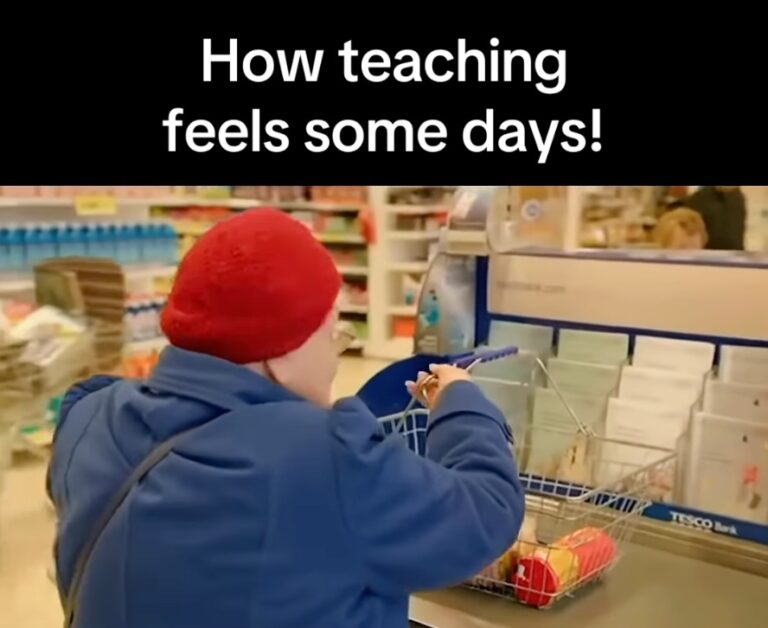
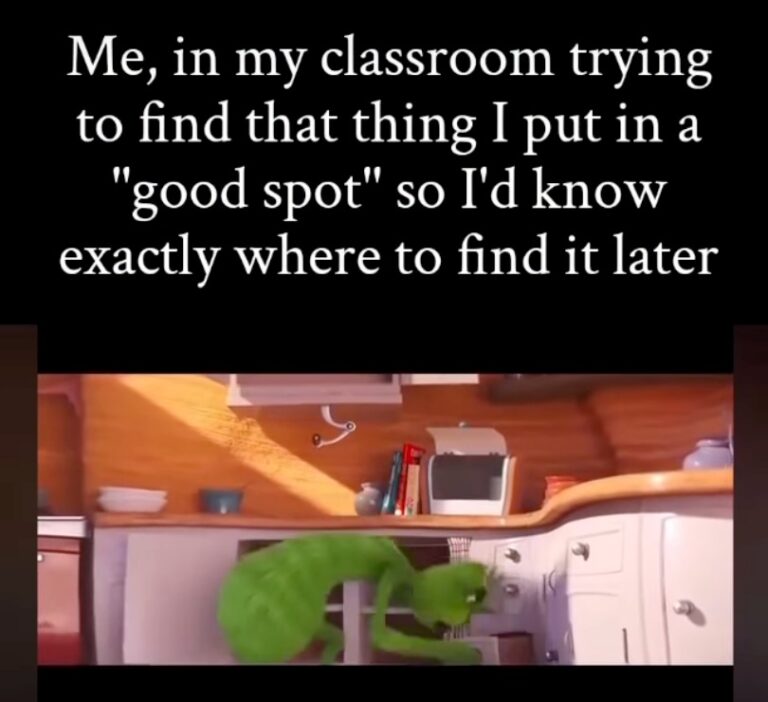
This one, about finding that “really important thing” from mr.j.learning.space, feels poignant to me this week as I am still trying to find the materials for a simulation I did last year. I am literally trying to find oversize needles and yarn in the haystack that is my house. I wish Socrait could tell me where I put things along with my to-do reminders.
And finally, the Superbowl halftime show makes an appearance with The germs entering your lungs when a student coughs directly in your mouth from erin.lee.author.